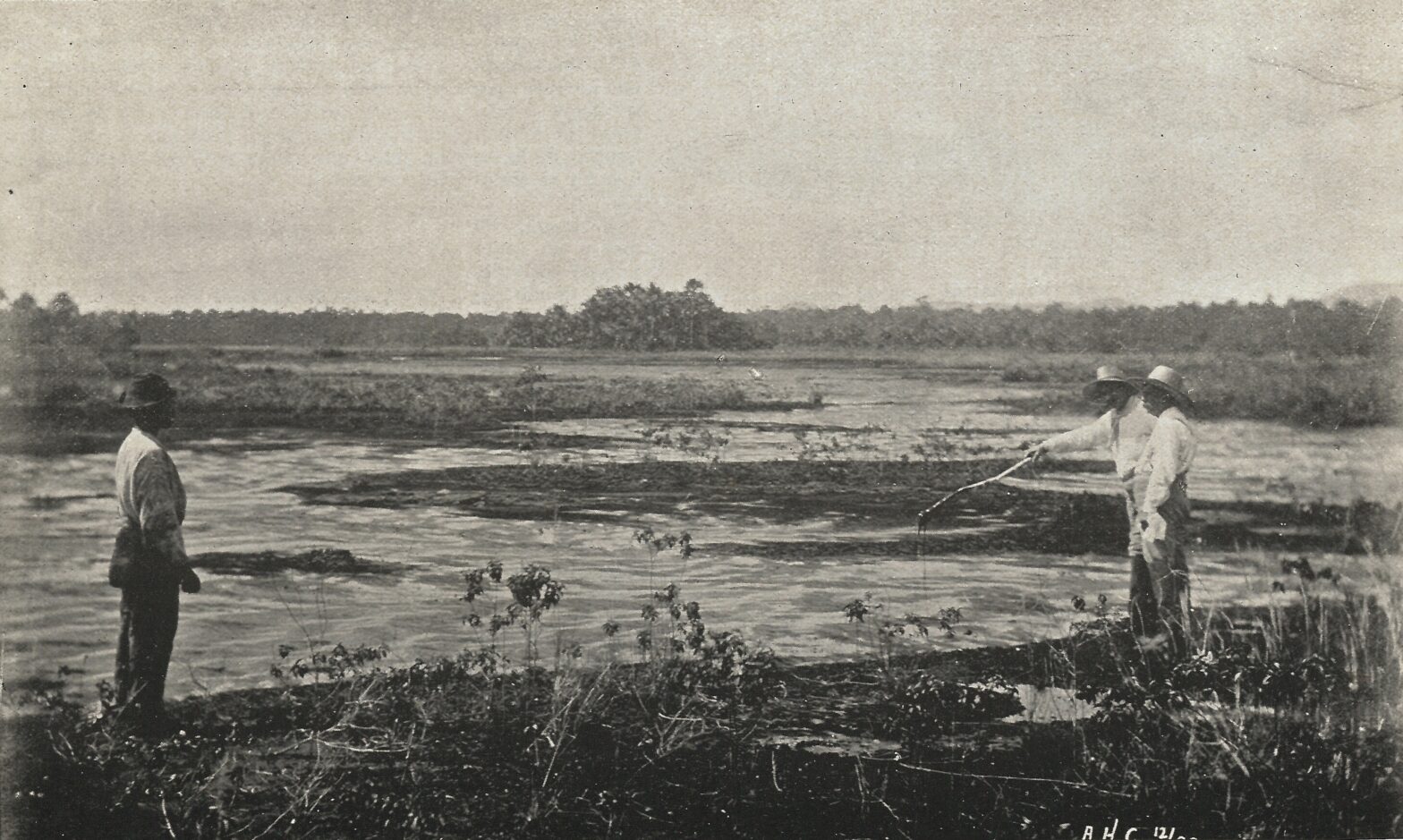
“Securing Hegemony through Law: Venezuela, the U.S. Asphalt Trust, and the Uses of International Law, 1904–1909,” Journal of American History, 2015
In a vital yet overlooked episode of U.S. foreign relations, in 1904 Venezuelan President Cipriano Castro seized the property of the New York & Bermudez Company (NY&B), a subsidiary of the U.S. Asphalt Trust. The company—which had previously bankrolled a failed anti-Castro revolution—hired international lawyers to lobby the U.S. government to intervene on its behalf. Contrary to prevailing accounts that condemn law as misguided idealism or dismiss it as pure rhetoric, this episode shows how legal institutions and expertise shaped the conceptualization and conduct of American diplomacy. Lawyers exerted outsized influence in the State Department and policymakers took law seriously. But the international law of the time was infused with concepts of empire and civilization, often encouraging great power intervention rather than restraining the use of force. Drawing on lawyers’ previously-untapped archives, this article shows how the NY&B leveraged professional networks to earn support for its questionable claims. When the apparent corruption of this process created a public relations crisis, Secretary of State Elihu Root turned to legalism to resolve the situation. Believing that law could manage relations among European and American states and private actors, Root promoted the use of arbitration, courts, and newly-professionalized legal expertise to expand U.S. hegemony. The success of Root’s plan turned on his ability to legitimize international law to foreign and domestic publics even as the NY&B continued to find ways to exploit it for its own purposes. Law facilitated the NY&B’s eventual triumph by ensuring that the matter remained subject to U.S. jurisdiction. In highlighting the legal component of the emergent American empire, this episode anticipates the role of legal argumentation and manipulation in the further expansion of American global power in the twentieth and twenty-first centuries.
Winner of the 2016 Binkley-Stephenson Prize from the Organization of American Historians
Securing Hegemony through Law